Coffee with Independent Creatives
Featuring Carla Januska, Founder and Owner of Smart Hive
Coffee with Independent Creatives shares stories, best practices and tips from independent creatives who designed and built their own businesses. How did they innovate? How did they overcome business challenges and persevere? How did they find their niche? How did they build their brand reputations? Follow this series to find inspiration to advance your own creative business.
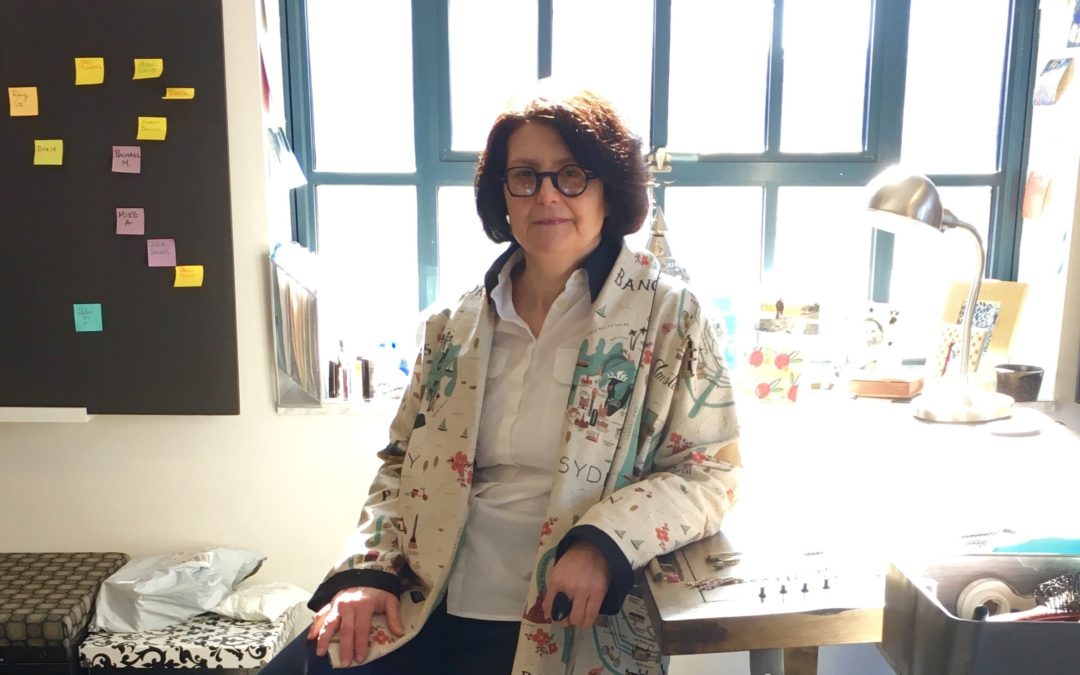
Carla Januska is founder and owner of Smart Hive, a strategic consultancy using data to create better experiences. Januska is also highly involved in the creative community in the Twin Cities. She holds several volunteer positions at AIGA Minnesota including secretary and co-chair of the solopreneur committee. I met with her to hear her story about how she found her niche.
Where have you found the most satisfaction in your career as an independent creative and business owner? What’s been rewarding for you? Have there been any wonderful surprises that you didn’t anticipate?
When I was a creative director at an agency, my role was 90% management. It was really rewarding to get back to making things. I decided that my company was going to focus on data visualization and information design. It was really different than the kind of work that we’d been doing at the agency. I think I was the first in the Twin Cities to start offering it. I loved the exploration — learning all about it, experiencing missteps, etc. I had to figure what it meant to people.
I also worked as a strategic consultant for agencies and larger enterprise organizations. Everything was so new. The organizations were new. The brands and many of the people I worked with were new. The projects were new. That was super satisfying. I liked the variety and it just kept me on my toes. I met more people in the first year of being on my own then in the last 10 years working at an agency.
How did you find your initial niche in data visualization? What made you decide to make a stand there and be the first? Because that’s a great position to be in and not everyone starts their business in that way.
I know it’s such a great story because it’s so wacky. I was at my job as a creative director sitting in front of my computer going through the 8 million emails I got a day and this email came up for conference that I had never heard of before and I didn’t know anything about it. And it was in Minneapolis called Eyeo Festival. Huh, that looks interesting. I signed up to go to the conference.
I had never heard of data viz. I had no idea what most of the people [at the event] were talking about. But I was so blown away by the work that literally my jaw dropped. I felt like I’d fallen into a subculture. This is like the most exciting thing I’ve seen in forever. This is what I want to do. I want this. And so I started jumping in, immersing myself, following down every lead.
And I was really looking for what was new. You never know where it’s going to come from. There’s the power of like a cold email. It made a huge difference for me. I didn’t want to miss the boat. And I think that was part of the inspiration for me to follow that spark and to use it as the differentiation [in my business]. I’m going to put all my eggs into this basket.
What I find fascinating about this story is that you had the guts to catch an early wave in data viz and build a business model around it.
Whenever you read stories about people in the early waves, nobody knows anything. It’s all surfing. And I can say this in hindsight because I had no idea it was going to be a thing.
Then what took off back in 2013 were infographics. I must have made a hundred trillion infographics. This is not what I meant by data viz. But it’s what people wanted.
I had this great idea about data viz and I could figure out how to launch it. So I launched it, but then what? It’s really about the marketplace. What does the market demand?
I was lucky that I hit the wave when I did. There are a lot more tools out there now and online platforms for making visualizations of your data yourself. The tools make it available to everybody. Does that mean everybody is great at it? No, but that’s where the positioning piece and where the quality of the work comes in. You have to be able to bring more to the table using the same tools as your client.
But it sounds like you’re also keeping your pulse on the market as things change — you change.
Yeah, I switched my emphasis last year. Previously, I’d tamped down some of my expertise to let the data viz show up. And then when I discovered: Oh, nobody’s buying data visuals. Oops! I really looked at all my positioning including what work I was showing, how I was talking about myself, and what parts of my expertise I was emphasizing. And I changed it all up. I really changed it up to emphasize my skills and experience in creative strategy, UX, and design. And so I show up differently in search.
It’s about keeping my finger on the pulse and looking at what does the market need? Because I do believe that you can find an audience for just about anything. But is it a big enough audience to support me as a solopreneur? Is there a scale there that I can really keep going at it? And that’s what I’m looking for.
So identifying a viable market that will pay you fairly is key to sustain a creative business?
When you’re an individual entrepreneur, you want to start to carve out a differentiated space for yourself. As a solopreneur I had very good differentiated space in custom data viz. Like I said, I caught the wave at the right time, but it wasn’t a big enough one.
And so that was a learning moment. And that’s why I think today I’m more conscious of what are people buying right now. How are they buying it? Because there’s a lot of business that’s flying around.
What do you perceive are the new and viable opportunities in design and in creative fields for solopreneurs?
Print design will always be around, no doubt about it. But it’s way easier to get into. And the knowledge base is way less. So anybody can do it.
When I think about what are people buying, it’s things they can’t easily make on their own. And of course then pair that up with what are your actual skills? What are you good at? Because that’s what you’re going to make money off of.
People ask me all the time for advice. If you’re going to go into graphic design, I would go into 3D if you’re an illustrator. If you are at all interested in the digital space, I would go into the web, specifically UX with some front end development. And video.